
Living with Gorlin syndrome
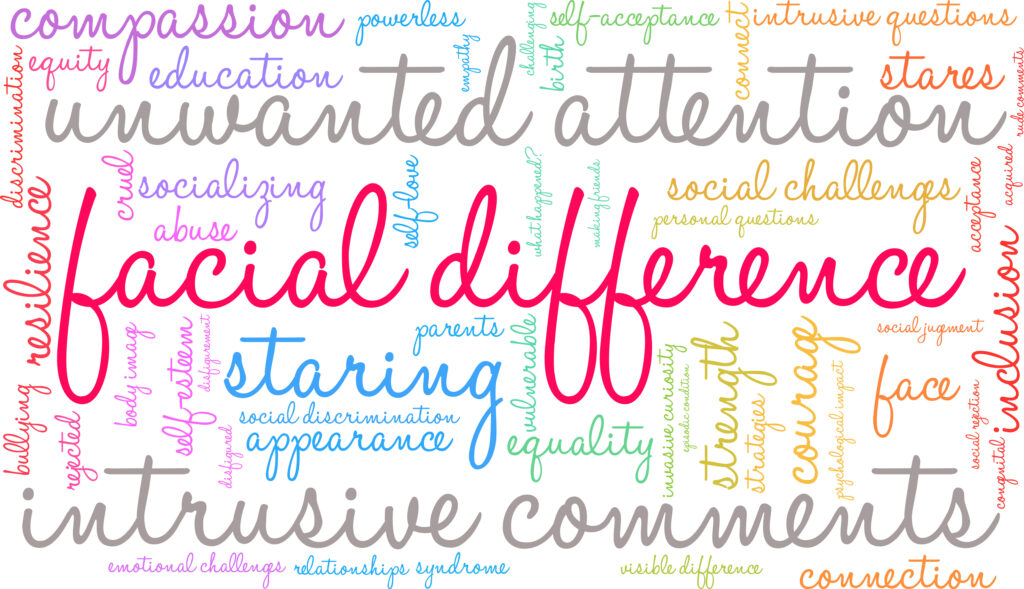
Do you or a family member lack confidence because of a visible difference?
Changing Faces, a charity based in the UK, offer a wide range of Self-Help for adults, families and young people. Learn new techniques to handle living with an unusual appearance. This includes advice on how to live with confidence, enjoy healthy relationships, prepare for school, handle bullying and feel confident about seeking work.
Changing Faces provides expert counselling, advice, and resources to people affected by disfigurement in the UK helping them feel good about themselves in a world where looks seem to count for so much.
For further information check out Changing Faces website. We are sure it will be of benefit to many
Does your child have special educational needs?
By law, children with special educational needs and disabilities are entitled to educational support.
Help is available at Parental Special Education Advice (known as IPSEA). The service offers free legal advice and support to people with a child or children who have special educational needs. Additionally, IPSEA work with parents or carers to get the right education for children and young people.
It is worth a visit to the website to see more detailed information the IPSEA website.


Psychological Help
Counselling is not commonly offered on diagnosis or even later on. If you feel you need help in coming to terms with Gorlin Syndrome speak to your GP or Consultant.
If you are worried about your condition you can also speak in confidence to the Gorlin Syndrome Group. You may be struggling to find information on our website. If that is the case email us via the contact us page and we’ll get back to you as soon as we can. Alternitively join our facebook group, where you will find multiple other people with gorlin syndrome and their family members.
Practical, medical, emotional and financial support may also available from: Macmillan Cancer Support.
They can also be contacted on the telephone – 0808 808 2020.
Education
If your child has Gorlin Syndrome it may be useful for you as a parent to advise teachers and other staff at school about your child’s educational and other needs, i.e. use of sunscreen and the need for regular hospital visits for monitoring and treatment of the condition.
UK schools have a Special Education Needs Coordinator (SENCO) whose role is to ensure every effort is made to tailor the individual needs, physical, emotional or educational, of a child within the school.
The Department of Education and Skills provides a framework for schools and educational organisations to ensure children receive the appropriate support they need. The framework indicates:
Children with medical needs have the same rights of admission to a school or setting as other children. Most children will at some time have short-term medical needs, perhaps entailing finishing a course of medicine such as antibiotics.
Some children however have longer term medical needs and may require medicines on a long-term basis to keep them well, for example children with well-controlled epilepsy or cystic fibrosis.Others may require medicines in particular circumstances, such as children with severe allergies who may need an adrenaline injection. Children with severe asthma may have a need for daily inhalers and additional doses during an attack.
Most children with medical needs can attend a school or a setting regularly and take part in normal activities, sometimes with some support. However, staff may need to take extra care in supervising some activities to make sure that these children, and others, are not put at risk.
An individual health care plan can help staff identify the necessary safety measures to support children with medical needs and ensure that they and others are not put at risk.


Ways to enjoy the sun safely
Sun damage can cause premature aging, wrinkles and skin cancer. Sunlight may be one of the environmental agents promoting the appearance of BCCs in Gorlin Syndrome.
Whatever your age, the best way to enjoy the sun safely and protect your skin from sunburn is to use a combination of shade, clothing and sunscreen. Children and teenagers might need a reminder or a helping hand, but setting a good example yourself is a great way to help them learn and get into good habits.
For ways to enjoy the sun safely visit: cancer research uk’s sun safety page.
Understanding Children and Young People’s Experiences
Recently published report courtesy of Rare Disease UK.
This report is the result of a project that, through imaginative and creative techniques, provided children and young people the opportunity to share their stories, in their own words. This gives us a valuable glimpse into their rare disease experience, as they see it.
The report highlights a number of key findings:
Children affected by rare disease are adaptive, resilient and do not see their rare disease as a fundamental part of their identity.
There are aspects of their care children think could be improved. The people that care for children, both at hospital and at home, play an important role in shaping children’s experience of living with a rare disease. Children’s needs and challenges change as they get older, meaning the experience of young people is often very different to that of children. Siblings understand a great deal about their brother or sister’s care and develop skills in empathy and compassion, despite facing challenges.
View the full report.

Living with a rare condition: The Effect on Mental Health
Rare Disease UK report reveals that:
Living with a rare condition can have a huge impact including anxiety, stress, low mood, emotional exhaustion and suicidal thoughts.
Many of the drivers of poor mental health reflect issues that are specific to managing a condition that is rare, and that patients/carers face challenges at many points during their journey from the onset of symptoms onwards.
Patients and carers can experience not being taken seriously by healthcare professionals, sometimes being misdiagnosed with psychiatric illness, when trying to access support for their physical condition. This can have both physical and mental health implications.
This work evolved out of an inquiry conducted by the All Party Parliamentary Group on Rare, Genetic and Undiagnosed Conditions, which identified mental health as a key issue facing rare disease patients and carers. Attendees shared the significant impact rare disease can have on mental health, and described the unmet mental health needs of patients and carers who frequently struggle to access support around these issues. These experiences echoed anecdotes from members of Rare Disease UK, Genetic Alliance UK, and SWAN UK; including those within Rare Disease UK’s recent Patient Experience Report.